
5 products


Frequently Asked Questions
What is polywire used for in electric fencing?
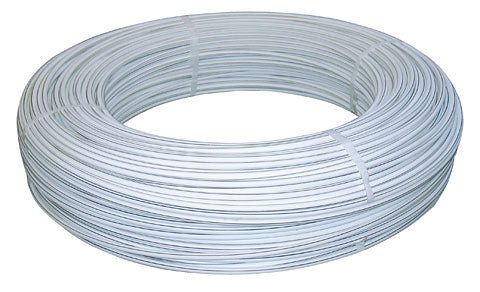
A polywire electric fence is ideal when creating temporary or permanent electric fence lines for livestock management. Farmers use it for rotational grazing, temporary paddock division, strip grazing, and portable enclosures. It’s simple to move and reposition as often as your grazing plan requires, because it’s lightweight and spools easily onto a reel, making it far more flexible than fixed wire fencing.
Is polywire strong enough for livestock fencing?
Yes, for most standard livestock applications, an electric fence polywire is strong enough when used correctly. The key is choosing the right specification for your animals. Heavier cattle require polywire with a higher tensile strength and more conductors, while you can manage sheep and poultry with lighter options. Polywire works through the electric deterrent rather than physical strength alone, so the shock it delivers is what keeps animals in place, not the wires' breaking strain.
How long does polywire last?
The lifespan of a poly electric fence wire depends on UV exposure, handling frequency, and the quality of the product itself. Dependable, high-quality polywire used in semi-permanent or permanent installations lasts several years. Polywire that gets moved frequently will experience more wear and typically last 1-3 seasons before conductivity drops noticeably. Storing your polywire properly on a reel and keeping it out of direct sunlight when not in use extends its life considerably.
Can polywire be used for temporary fencing?
Absolutely, temporary fencing is actually where polywire performs best. You can spool it onto portable reels, set it up without tools, and move it to a completely different location in a matter of minutes. Graziers use it constantly for strip grazing and break fencing, where the fence line needs to shift every few days. Pair it with a portable energy source and some step-in posts, and you have a fully functional temporary fence system that goes up and comes down as fast as you need it to.
What is the difference between polywire and polytape?
Both polywire fencing and polytape carry electric current through conductive strands woven into a polymer base, but they differ in form and application. Polywire is round, like thick twine, making it easy to spool, handle, and feed through insulators. Polytape is flat and wide, typically 20 to 40 mm, making it far more visible to animals, particularly horses. If visibility is your main concern, polytape is worth considering.